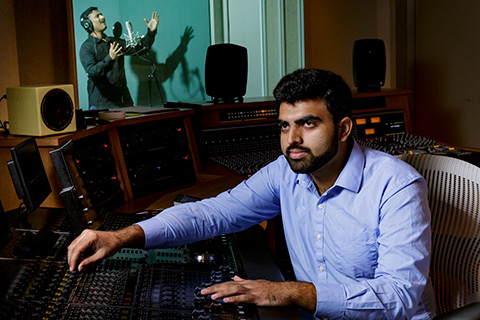
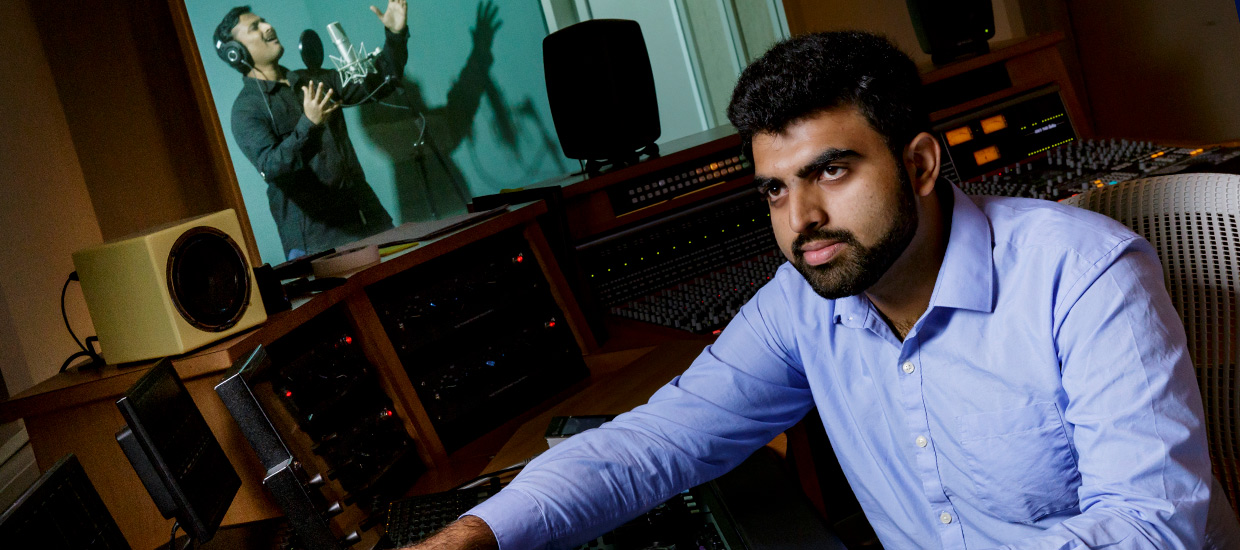
Every Music Engineering student graduates with more than a degree.
They leave with a portfolio that demonstrates what they can create.
If you have a keen ear for music, a burgeoning interest in electrical engineering, and the drive to succeed in entertainment behind the scenes, a music engineering program may be the right choice for you. This unique degree combines technical engineering knowledge with creative musical artistry. Music engineers activate both sides of their brains, helping whoever is performing sound their best. With a range of career options available to you after attaining a music engineering education, this vocation can provide remarkably unusual career opportunities.
What Can I Do With a Music Engineering Degree?
Music and sound engineers work in a wide range of fields. Some music engineers work in the most visible venues: rock and hip hop concerts, comedy shows, and other live performances. Other music engineers work in the recording studio, running the sound boards and ensuring that the sounds of instruments and voices record correctly. Still other music engineers work in sound manufacturing, for app or video game companies, or in TV, film, or commercial work. Still other music engineers work at the companies that actually make the equipment, remaining on the cutting edge of music engineering technology. Music engineers work anywhere that electrical engineering and computer science meet sound.
What Does a Music Engineering Major Learn?
Music engineering majors focus intensively in traditional music studies in addition to their technology knowledge-building. Enrolling in private lessons and small group ensembles is an essential part of a music engineering degree. You’ll have the opportunity to hone your skills in a variety of instruments, honing your aural ability along the way. The combination of a good ear, musical skills, and technical skills is the recipe for success for any music engineer.
Music engineering students learn how to use hardware, but they also learn how to use software. A good music engineering program will provide students with all of the technical resources necessary to get a good handle on how to use industry-standard equipment. Equally importantly, students also learn the standard-setting philosophical and critical approaches to music engineering. Though technology changes over time, the core approaches to music engineering do not.
What Kinds of Classes Does a Music Engineering Student Take?
As an undergraduate studying music engineering, your primary focus will be on music itself. You will get to closely study a focus instrument just like any other student in the music school. As an undergrad you will also have to minor in either electrical or computer engineering. This combination of skills will give you the foundation you need for any job in the field. Some of the classes you take may include the following:
- Experiential musicianship
- Skills labs
- Keyboarding studies
- Software engineering
- Artificial intelligence
- Audio signal processing
- Acoustics
- Data structures
- Timbral ear training
Depending on the school, your course of study will differ. This is why it’s important to get in contact with the school before you apply. You’ll want to have some conversations with an admissions counselor to make sure that the school is the best fit for you. If you have the time and resources to visit the school, you may want to visit in person.
What Kinds of Internships Are Available?
It’s important to select a music engineering school located in a place with plenty of opportunities for internships and hands-on learning. Many music engineering interns have worked in recording studios and at concert venues. As in any field, making a good first impression while you’re an intern can be extremely important: it may be the way you get your first post-graduation job! While you’re looking at schools to apply to, see if you can get some information about where alumni have landed permanent positions. This will help you learn about what kinds of connections the faculty and program itself may have to offer.
What Kind of High School Students Want to Go Into Music Engineering?
Many different kinds of people pursue music engineering careers. That being said, prime candidates for music engineering programs do generally share a few key characteristics:
- A foundation in music. Most of the students who apply to music engineering college programs have already spent some time with their hands on an instrument. When you apply, the committee will consider how much time you’ve already invested into music-related fields.
- A genuine musical curiosity. Because of the technical nature of the program, prime candidates should be genuinely interested in what will produce and capture the best sound. The more passion you have for a certain subject area, the more successfully devoted you will be.
- A patient and collaborative nature. Patience and a collaborative nature are two of the most important characteristics of a music engineering candidate. Throughout your career, you will be working with people who have various personality types, backgrounds, and approaches. It’s important that you’re able to work with anyone who steps in front of the mic.
- The potential to critically problem-solve. Music engineering candidates work in diverse, dynamic situations. Furthermore, as you begin working professionally, you will not only need to deal with various people, but with unique and idiosyncratic equipment in each venue. In music engineering, the ability to critically and creatively problem-solve is worth its weight in gold.
What Do I Need to Know Before Applying to a Music Engineering Program?
The Frost School of Music’s music engineering program was developed over 40 years ago, and it was the first program of its kind in the nation. Since the inception of our department, we’ve remained cutting-edge, evolving our approach to grow with the industry. With plenty of opportunities for hands-on experience in our on-campus studios, students gain real-world experience even before they graduate. Our alumni have gone on to enjoy work with a wide variety of companies and individual performers, making their mark in the field of music engineering.